Stop Skipping Office Hours: The Free Academic Advantage Most Students Never Use

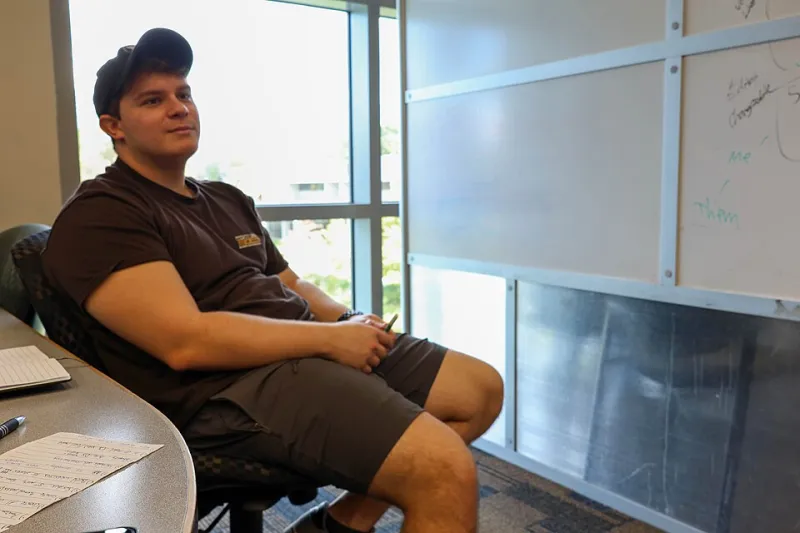
Photo: Germanna CC, CC BY 2.0, via Wikimedia Commons
Every semester, professors block out hours in their schedules specifically to meet with students. They sit in their offices — or open up a Zoom link — and wait. And most of the time, nobody shows up.
Meanwhile, students are paying hundreds of dollars per credit hour, struggling through material, and quietly convincing themselves that asking for help is somehow embarrassing or not worth the effort.
There's a real disconnect here, and it's costing students more than they realize.
What Office Hours Actually Are (And Aren't)
First, let's clear up a common misconception: office hours aren't just for emergencies. You don't have to be failing the class or completely lost to justify showing up. Office hours are open time that professors set aside for any kind of academic conversation — clarifying confusing concepts, talking through a paper idea, reviewing feedback on a graded assignment, or even just getting a better sense of where to focus your studying.
Think of it this way: the person holding office hours is the same person who designs your assignments, writes your exams, and ultimately assigns your grade. Getting face time with that person — and understanding how they think about the material — is genuinely one of the most efficient ways to improve your performance in a course.
And it's completely free.
Why Students Avoid Them Anyway
The reasons students skip office hours are pretty consistent. Some feel like they'd be wasting the professor's time. Others worry they'll look dumb if they don't already have smart questions ready. Some just don't know what they'd even say. And for students in online classes especially, there's an added layer of awkwardness around virtual meetings with someone you've never really interacted with.
All of those feelings are valid — and all of them are worth pushing past.
Here's the reality: professors generally like students who come to office hours. It signals engagement. It shows you care about the material and your grade. Even if your question feels basic to you, asking it is almost always more impressive than not showing up at all.
How to Prepare So You Don't Show Up Empty-Handed
The students who get the most out of office hours come with something specific. That doesn't mean you need a perfectly polished question — it just means you've put in a little thought beforehand.
Before you show up (or log on), try to nail down at least one of the following:
- A specific concept from the lecture or reading that didn't click — not just "I'm confused," but "I'm confused about how X connects to Y"
- A piece of feedback on a graded assignment you want to understand better — bring the assignment and the rubric if you can
- A question about an upcoming project or paper — even something as simple as "Am I thinking about this prompt the right way?"
- A topic you want to explore further beyond what was covered in class — professors love this one
Coming in with something to anchor the conversation takes the pressure off you to perform and gives the professor something concrete to work with.
What a Productive Office Hours Visit Actually Looks Like
Let's compare two scenarios.
Scenario A: A student logs into virtual office hours and says, "I'm just kind of lost on everything from this week." The professor asks a few questions, the student gives vague answers, and they spend 15 minutes in a general review that could have been a YouTube video. The student leaves feeling like it wasn't really worth it.
Scenario B: A student logs in and says, "I read the chapter twice but I'm still not understanding the difference between these two frameworks you mentioned in the lecture — can you walk me through how you'd apply each one to the case study from last week?" The professor explains it in a way that's tailored to exactly where the student is stuck. The student takes notes, asks two follow-up questions, and leaves with a clearer mental model — plus a much better sense of how the professor thinks about the material.
The difference isn't intelligence. It's preparation.
Building an Actual Relationship With Your Instructor
Here's a longer-game benefit that doesn't get talked about enough: students who attend office hours regularly tend to build genuine relationships with their professors, and that has real value.
We're not talking about schmoozing for a better grade. We're talking about the kind of relationship where a professor knows your name, understands your academic goals, and is willing to write you a strong letter of recommendation — or connect you with an opportunity — because they've actually had real conversations with you.
In a large lecture course or an online class with hundreds of students, that kind of visibility is rare. Office hours are one of the most direct paths to it.
Even just two or three visits across a semester can shift you from "a name on a roster" to "a student I actually know" in a professor's mind. That matters more than most students realize, especially when you're navigating things like grade disputes, extensions, or academic references down the road.
A Few Practical Tips for Virtual Office Hours Specifically
For online students, virtual office hours can feel even more intimidating than in-person visits — but they're also more convenient than ever. A few things that help:
- Test your tech beforehand. Log into Zoom or whatever platform is being used a few minutes early so you're not fumbling with settings when the professor is waiting.
- Have your materials open. If you're asking about a specific assignment or reading, have it pulled up on your screen before the meeting starts.
- Use your camera if you can. It makes the conversation feel more natural and helps you come across as engaged.
- Follow up with a quick thank-you email. Something like, "Thanks for your time today — that explanation of [topic] really helped." It takes 30 seconds and leaves a genuinely positive impression.
The Bottom Line
Office hours might be the single most underused resource in higher education. You're already paying for access to your professors — actually using that access is just smart. Whether you're trying to pull up a grade, deepen your understanding of the material, or set yourself up for a strong recommendation letter, showing up to office hours is one of the lowest-effort, highest-return moves you can make as a student.
So the next time you see those office hours listed in your syllabus, don't scroll past them. Put one on your calendar. Come with a question. And see what happens.