Your Phone Is Not Your Friend Right Now: How to Actually Focus During Online Classes
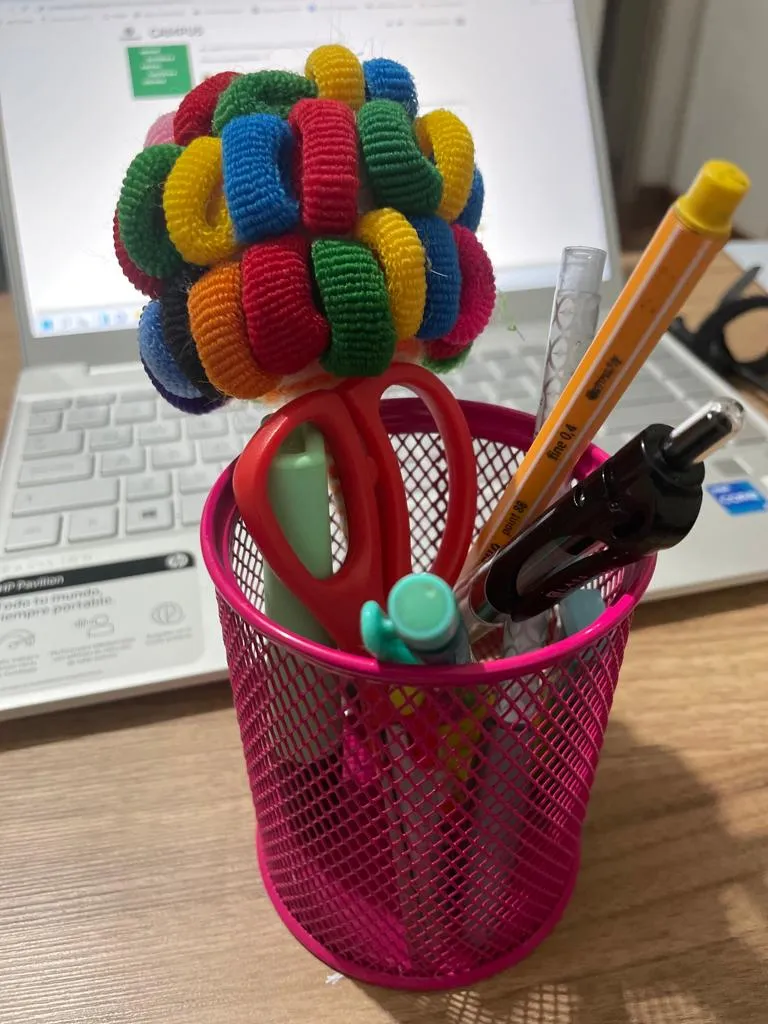
Photo: MarycieloMC, CC BY-SA 4.0, via Wikimedia Commons
Let's be honest for a second. You sit down to watch a lecture, crack open your laptop, and twenty minutes later you're deep in a Reddit thread about something you don't even care about. Sound familiar? Before you start beating yourself up about having zero willpower, here's something worth knowing: it's not entirely your fault.
The apps on your phone and the platforms on your laptop are designed — by some of the most well-funded engineering teams in the world — to grab your attention and hold it hostage. When you're trying to study online, you're not just fighting distraction. You're fighting a system built specifically to make focus feel impossible.
The good news? Once you understand what's happening under the hood, you can actually do something about it.
Why Notifications Hit Differently Than You Think
Every ping, buzz, and red badge on your screen triggers a tiny dopamine release in your brain. That's not an exaggeration — it's basic neuroscience. Your brain is wired to respond to novelty, and notifications are basically engineered novelty delivered on demand.
Here's the part that really stings: research from the University of California, Irvine found that after an interruption, it takes an average of 23 minutes to fully return to a task. So that two-second glance at a text message? It just cost you almost half an hour of real cognitive focus. If you're getting interrupted three or four times during a 90-minute lecture, you may never actually reach the kind of deep concentration where real learning happens.
And it's not just the notification itself. Even knowing your phone might buzz is enough to split your attention. A study out of the University of Texas found that having your phone sitting on your desk — even face down, even silenced — reduces your available working memory. Your brain is quietly dedicating mental resources to not checking it.
The Platform Problem Nobody Talks About
Here's something students rarely consider: the same companies that run your social media apps also design the browsers and operating systems that host your online classes. The attention economy doesn't clock out when you open Canvas or log into your Zoom lecture.
Tab switching is a huge one. The average student has multiple tabs open while watching a recorded lecture — email, Instagram, maybe a group chat. Every tab is a potential escape hatch, and your brain knows it. The moment the lecture gets even slightly boring or confusing, your eyes drift to that little YouTube tab and suddenly you're gone.
This isn't weakness. It's your brain following the path of least resistance, which is exactly what it's supposed to do. The trick is making the path of least resistance point toward your coursework instead of away from it.
Reconfiguring Your Digital Environment (Without Going Off the Grid)
You don't need to throw your phone in a lake. You just need to redesign your setup so your devices stop working against you.
Start with your notification settings. Go through every app on your phone and ask yourself: does this app need to notify me in real time? For most apps, the answer is no. Turn off notifications for social media entirely. Set your texts and calls to come through only from your favorites list during study hours. On iPhone, Focus Mode lets you create a custom filter — a "Study" mode that silences everything except what you actually need. Android has a similar Do Not Disturb setup with granular controls. Use them.
Put your phone in another room. Not in your pocket. Not face down on the desk. Another room. This sounds dramatic but it genuinely works. Out of sight means your brain stops allocating resources to the possibility of checking it. If you need music or a timer, use your laptop instead.
Use a single-purpose browser setup. Consider having one browser strictly for school — no social accounts logged in, no bookmarks to entertainment sites. Chrome, Firefox, and Edge all let you create separate browser profiles. Keep your school profile clean. Use an extension like Cold Turkey or Freedom to block distracting sites during your study blocks. These tools let you schedule blocks in advance, which is helpful because you can set them up when your willpower is high instead of trying to resist temptation in the moment.
Close the tabs you're not using. Seriously. Every open tab is a tiny mental weight. If you need to reference something, bookmark it and close it. A cleaner browser is a calmer brain.
Redesigning Your Physical Space Matters Too
Your environment sends signals to your brain about what mode you're in. If you study in bed, your brain associates that space with sleep and relaxation — which makes focus harder. If your desk is covered in clutter and snacks and your TV remote, your brain is already partially somewhere else.
Set up a dedicated study spot, even if it's just a corner of your kitchen table. Keep it consistent. When you sit there, your brain starts to learn that it's time to work. Add a few environmental cues — a specific playlist, a particular lamp, whatever helps you signal the shift into focus mode.
Noise is worth thinking about too. Some students focus better with ambient sound (lo-fi music, coffee shop noise, rain sounds) while others need silence. Figure out which one you are and set up accordingly. Apps like Brain.fm or even a free YouTube lo-fi stream can help drown out unpredictable household noise without adding the distraction of lyrics.
Build Focus Like a Muscle, Not a Rule
Here's the mindset shift that actually makes all of this stick: focus isn't something you either have or don't have. It's a skill you build through practice, and your environment is either helping or hurting that practice every single day.
Start small. Try 25-minute focused work blocks with a 5-minute break — the classic Pomodoro method. During those 25 minutes, notifications are off, phone is gone, tabs are closed. After the break, you can check everything. You're not cutting yourself off forever; you're just creating a container where real learning can actually happen.
Over time, those blocks get easier. Your brain learns that distraction isn't available right now, and it stops looking for it as aggressively. That's not willpower — that's conditioning, and it works.
You Deserve to Actually Learn
Online learning is already harder in some ways than sitting in a physical classroom. You don't have a professor making eye contact with you, no peers to keep you accountable in real time, and you're often doing it from the same couch where you watch Netflix. The digital environment makes all of that harder by default.
But when you take control of your setup — your notifications, your physical space, your browser, your phone's location — you shift the odds back in your favor. You're not fighting your attention span anymore. You're working with how your brain actually functions.
And that's when online learning stops feeling like a constant uphill battle and starts feeling like something you can actually win.