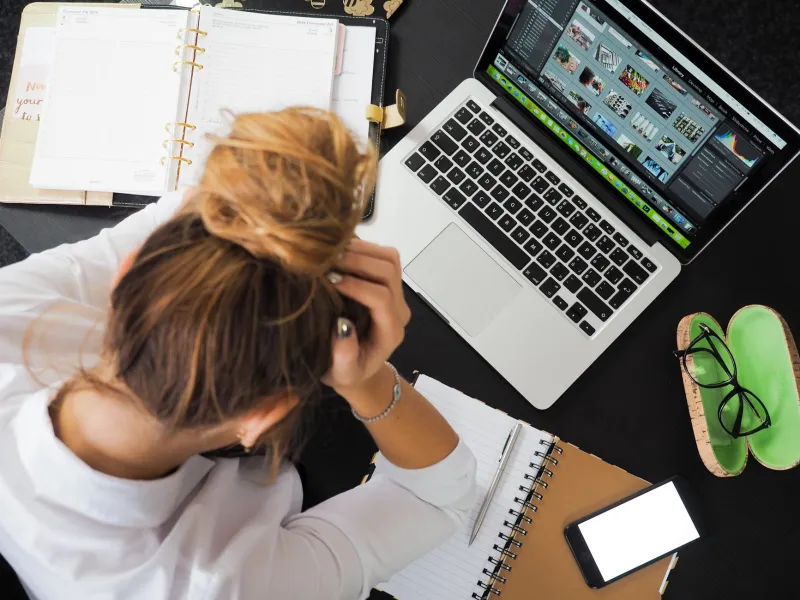
Frozen on Mute: Why Zoom Participation Feels So Hard and What to Do About It
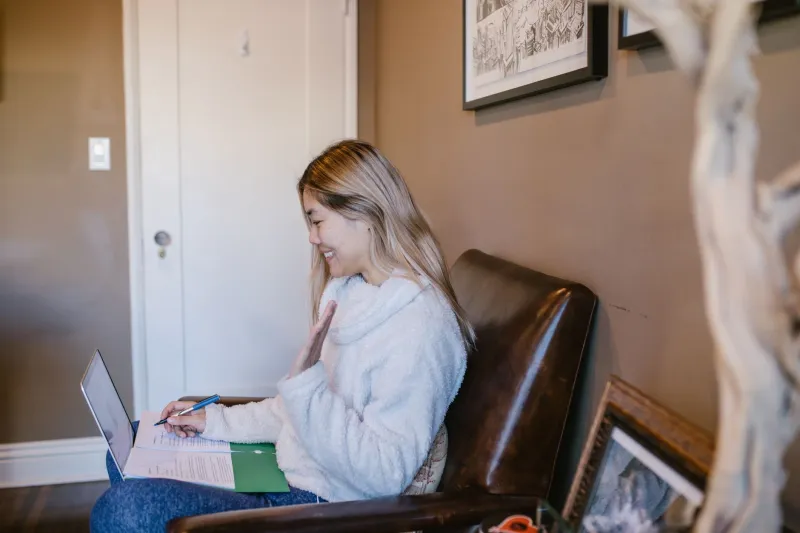
You know the feeling. Your professor asks a question. You actually know the answer. Your brain is practically screaming it. And yet — your hand stays down, your mic stays off, and someone else eventually fills the silence while you sit there wondering why you couldn't just speak up.
Zoom participation anxiety is one of the most undertalked struggles in online education, and it affects way more students than you'd think. This isn't about being shy, unprepared, or disengaged. It's about a specific kind of mental friction that synchronous online classes create — friction that traditional classrooms just don't have in the same way. Let's break down what's actually going on, and more importantly, how to get out of your own head before it starts costing you points.
Why Online Participation Feels Different Than In-Person
In a physical classroom, participation has a kind of natural rhythm. You make eye contact with your professor, you sense the energy of the room, and social cues carry you forward. Online? That whole system falls apart.
When you're on Zoom, you're essentially performing in a little box on someone's screen — and you know it. Researchers call this "camera self-focus," and it's exactly what it sounds like: instead of thinking about what you're saying, you're hyper-aware of how you look saying it. Bad lighting, weird angles, the fact that you can literally see yourself talking — it creates a feedback loop that makes speaking up feel way more exposing than it does in person.
Add to that the social stakes. In a physical class, a comment that lands awkwardly fades into the ambient noise of the room. Online, it hangs there in a moment of digital silence, and you feel like everyone is staring directly at your face in HD while you process the regret. It's a lot.
The Lag Problem Nobody Talks About Enough
Here's a technical issue that doesn't get nearly enough credit for how much it messes with participation: audio delay.
Even a half-second lag — which is totally normal on most video platforms — is enough to destroy the natural rhythm of conversation. You start talking, there's a beat of silence, and suddenly you're not sure if you interrupted someone, if they're still talking, or if your mic is even on. That uncertainty is paralyzing.
Natural conversation depends on tiny, unconscious timing cues. When those cues get disrupted by lag, your brain interprets the situation as socially risky, and it pumps the brakes. It's not weakness. It's literally your nervous system responding to an environment it wasn't designed for.
Knowing this doesn't fix the lag, but it does reframe what's happening. You're not being weird or overly anxious — you're dealing with a genuinely awkward communication medium, and every other student in that Zoom room is navigating the same thing.
The Unmute Button as a Mental Block
There's something almost absurdly symbolic about the mute button. It's a physical barrier between you and participation that doesn't exist in a regular classroom. And because it requires a deliberate action — a click, a keyboard shortcut, a conscious choice — it gives anxiety a foothold it wouldn't otherwise have.
Psychologists call this kind of friction a "behavioral bottleneck." The mute button isn't just a technical feature; it's become a psychological checkpoint. Every time you think about speaking up, your brain has to clear that extra hurdle, and sometimes the hesitation is just long enough for the moment to pass.
The fix? Make unmuting automatic, not deliberate. A lot of students find it helpful to go into class already unmuted when the setting allows, or to use push-to-talk shortcuts so the action becomes muscle memory rather than a conscious decision. The less mental energy the mechanics take, the more you have left for actually contributing.
Practical Moves That Actually Help
Use the chat strategically. If unmuting feels like too much in the moment, the chat window is your best friend. Drop your thought there — even a short one. Many professors actively watch chat and will lift your comment into the verbal conversation. You participated. It counts.
Prepare two or three talking points before class. You don't need to have something to say about everything. Just show up with one or two observations or questions you've already thought through. When a relevant moment comes up, you're not generating a response on the fly — you're just delivering something you've already worked out. Way less pressure.
Talk to your professor before the problem gets worse. This feels uncomfortable, but office hours exist for exactly this kind of thing. A quick email or a two-minute conversation explaining that you're working on being more vocal goes a long way. Professors notice effort. They also tend to create openings for students who've told them they're trying — a direct question, a follow-up, a nod in your direction. You've essentially recruited your professor as a low-key participation coach.
Lower the stakes on your first comment. Don't try to make your first contribution of the semester a brilliant insight. Ask for clarification on a concept. Agree with something a classmate said. Respond to a direct question with a short answer. The goal for your first few times isn't to impress anyone — it's just to break the ice so unmuting stops feeling like a big deal.
Turn your camera on, even if it's uncomfortable. This sounds counterintuitive given everything we said about camera anxiety, but here's the thing: students who keep their cameras on tend to feel more present in the class, which makes participation feel more natural over time. You don't have to look perfect. A clean-ish background and decent lighting is plenty. The more you normalize being visible, the less loaded it feels.
Participation Grades Are Real — Don't Leave Them on the Table
Here's the practical reality: participation is often a graded component, and in online classes, professors have fewer ways to observe your engagement than they do in person. Your verbal contributions, your chat activity, your reaction emojis — all of it is visible (or invisible) in a way that has direct grade implications.
Students who participate regularly don't just earn those points. They build a relationship with their professor that pays off in recommendation letters, research opportunities, and the kind of academic support that's hard to get if you're just a quiet box on a grid. Online classes can feel anonymous, but they don't have to be — and breaking out of that anonymity starts with unmuting yourself.
It's uncomfortable at first. That's normal. But the discomfort is temporary, and the benefits — better grades, stronger professor relationships, more confidence in future classes — stick around long after the semester ends.
You already know the answers more often than you think. Start letting people hear them.